 Sign in
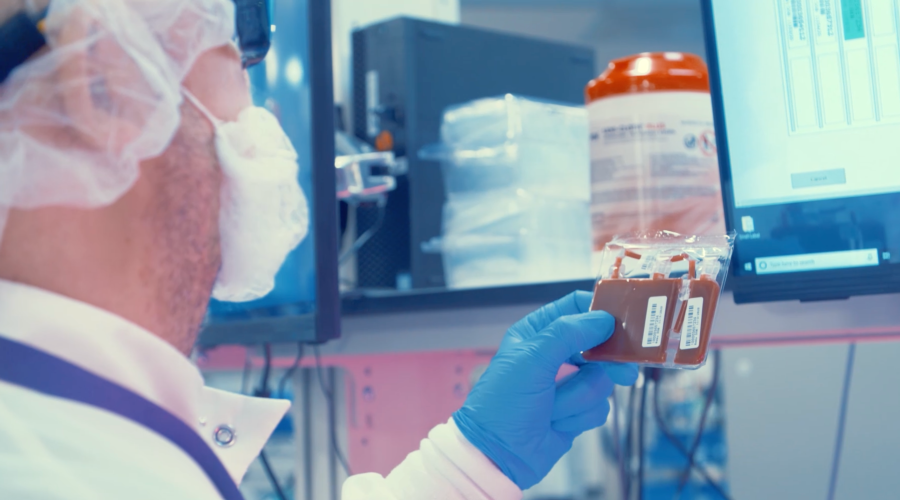
At Insception Lifebank, we pride ourselves on providing support and education to individuals at all stages of family planning. Once a family has welcomed a child and banked their cord blood sample, one of the most common questions we receive is: “Who can potentially use my baby’s cord blood?” Let’s dive into this topic and discuss who might be able to benefit from this potentially powerful resource.†
What is human leukocyte antigen (HLA) matching?
Human leukocyte antigens (HLAs) are proteins on the surface of cells that are unique to that person. The immune system uses HLA markers to differentiate the body’s own cells from foreign cells.1 HLA matching refers to how compatible the patient’s and stem cell donor’s immune markers are to each other.
HLAs are inherited. Here’s how HLA matching works within an immediate family:
- The child is a perfect genetic match to their own cells
- Biological parents are always a partial genetic match to their child’s cells
- Full siblings can be either a full (25% chance), partial (50% chance), or no match (25% chance)
- Half siblings can be either a partial match (50% chance) or no match (50% chance)
The odds that a biological relative will be a partial match to the newborn decrease as the genetic relationship between the relative and the newborn becomes more distant.
Who can use privately banked cord blood in transplant medicine?
Cord blood may be used in a stem cell transplant to rebuild a healthy blood and immune system. A stem cell transplant can treat over 80 conditions, including certain cancers, as well as blood, immune, and metabolic conditions.2 Some points to consider:
- Although it is unlikely that a child would use their own cord blood for a stem cell transplant, a child is a 100% genetic match to their own cord blood.
- In most cases, stem cells from a healthy donor, such as a sibling, are required for a stem cell transplant.
- Cord blood from one child could be a match for their full siblings, providing a readily available source of stem cells if a sibling needs a stem cell transplant. Each full sibling has a 75% chance of being at least a partial genetic match.
- Although less likely to use them for a stem cell transplant, biological parents are always a partial match to their child’s cord blood.
Who can use privately banked cord blood in regenerative medicine?
Cord blood is also being studied in regenerative medicine treatments, where the goal is to repair and regenerate damaged cells, tissues, and organs to help restore function.3 For example, cord blood has been evaluated in regenerative medicine for conditions such as hypoplastic left heart, type 1 diabetes, spinal cord injury, as well as cerebral palsy, and other pediatric brain injuries.4 While this research is still evolving, many of the clinical trials thus far have involved the use of a child’s own cord blood or a genetically matched sibling’s cord blood unit.4 Our storage facility in Tucson, AZ has released cord blood samples planned for use by both the baby as well as siblings for experimental regenerative medicine treatments.5
Ultimately, the type of treatment being performed will play a big role in who may be able to use a cord blood sample, and a patient’s treating physician will determine the best source of cells. Insception Lifebank works closely with the patient’s care team in accordance with specific protocols when a sample is being requested for treatment – allowing Insception Lifebank families to access this resource when they need it the most.
Expecting a child, or have friends or family who are? How about a grandchild? Enroll with Insception Lifebank today or refer a friend. As a client, when someone you refer preserves with Insception Lifebank, you’ll receive a cheque or storage credit to fund your storage fee.
2. Mayani, H., Wagner, J.E. & Broxmeyer, H.E. Cord blood research, banking, and transplantation: achievements, challenges, and perspectives. Bone Marrow Transplant 55, 48–61 (2020). https://doi.org/10.1038/s41409-019-0546-9.
3. Association for the Advancement of Blood and Biotherapies. Regenerative Medicine. Accessed June 24 2025. https://www.aabb.org/blood-biotherapies/biotherapies/facts-about-cellular-therapies/regenerative-medicine.
4. Kindwall-Keller TL, Ballen KK. Umbilical cord blood: The promise and the uncertainty. Stem Cells Transl Med. 2020;9(10):1153-1162.
5. Internal data on file.