 Sign in
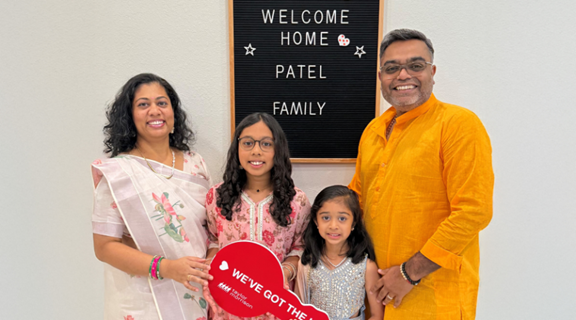
Every parent shares a common dream: to see their children grow up healthy and full of life. We strive to protect them from the moment they enter the world, making decisions today that we hope will safeguard their tomorrow. For the Patel family, a decision made at the birth of their second child proved to be a lifeline for their first.
A challenging start
Prakruti Patel knew she was a carrier for beta thalassemia, a genetic blood disorder, having been tested as a teenager. Her husband’s status was unclear, a common scenario for many families. When their daughter, Pahal, was born, newborn screening confirmed that she had inherited the condition.
Beta thalassemia affects the body’s ability to produce hemoglobin, the protein in red blood cells that carries oxygen throughout the body.1 When the body cannot make enough functional hemoglobin, it may lead to severe anemia, fatigue, and other serious complications.1
Doctors reassured the family that the condition would likely be manageable but Pahal might need blood transfusions from time to time. For the first few years of her life, Pahal was a happy, active child, and the family managed her health with careful monitoring.
However, things shifted dramatically when Pahal turned five. She received a diagnosis of ulcerative colitis, a chronic inflammatory bowel disease. This secondary condition had a profound effect on her body, causing the symptoms of her beta thalassemia to emerge with greater severity.
Navigating complex medical waters
The combination of beta thalassemia and ulcerative colitis presented a complex puzzle for Pahal’s medical team. They tried multiple treatments to manage her symptoms, including regular blood transfusions to maintain hemoglobin levels, but complications eventually arose.
The family watched as Pahal’s energy declined. The side effects of the treatments and the transfusions began to take a toll.
This is a moment no parent wants to face, yet it is where the Patel family’s foresight became their greatest strength. When Pahal’s baby sister was born, the family had decided to store her cord blood, a decision influenced by a friend in Prakruti’s thalassemia support group who told her about cord blood banking.
That decision was monumental for the family.
The perfect match
Testing revealed that Pahal’s baby sister was a perfect genetic match to Pahal. This match allowed doctors to move forward with a stem cell transplant using the preserved cord blood as well as bone marrow from her sister. Stem cells from cord blood are powerful. For Pahal, these cells were one of the keys to resetting her body’s production of healthy blood cells and healing her body as a whole.
Understanding beta thalassemia and cord blood
To understand the impact of this treatment, it helps to look at the science. In cases like Pahal’s, where the condition becomes severe, the bone marrow (the factory for blood cells) produces defective cells. A stem cell transplant works by replacing the patient’s unhealthy bone marrow stem cells with healthy ones.
Cord blood stem cells can be used as part of a stem cell transplant to help rebuild the blood and immune system for certain cancers, as well as blood, immune, and metabolic disorders.2
Life after transplant
Today, Pahal’s life looks very different. She has returned to the joys of childhood. She is back in school. Her days are filled with the activities she loves: drawing, painting, and cooking. She has the energy to explore sports, having tried swimming, soccer, volleyball, ballet, and gymnastics.
This transformation was made possible because her parents chose to preserve her sister’s cord blood, giving her a second chance at a healthy, active life.* When asked what she hopes to be when she grows up, she answers confidently that it will “definitely be something in the medical field.”
Choose the best for your family
The Patel family’s story may be one of a kind, but the desire to protect our children is universal. “I would tell [expectant parents] to get as much information as you can. It’s about hoping you can help a family member when that time comes.” Preserving your baby’s newborn stem cells is a once-in-a-lifetime opportunity, which is why it’s important to understand your options and make an informed decision for your family.
Expecting a child, or have friends or family who are? Join Insception Lifebank today or refer a friend. When someone you refer preserves with Insception Lifebank, you’ll receive a cheque or storage credit to fund your storage fees.† — and they’ll receive special pricing on our newborn stem cell bundle.
For more stories about other families who pursued cord blood treatments, please visit insception.com/blog.